

Pelham Rawstorn Papillon, born 22 June 1864 at Devonport Street in London's Hyde Park, was raised at Lexden Manor in Colchester, educated at Winchester School and studied at University College Oxford (BA Law). He played cricket for County and the MCC, although I believe this is the Madras Cricket Club and not Middlesex. He was the Sussex magistrate with the longest service, first appointed to the bench in 1888 aged 24, serving until his death March 18th 1940.
In his youth he was a bit of an amateur archeologist, donating this lovely piece of ivory shaped like a Gladiator which he dug up at Lexden in Colchester. It's currently on display at the British Museum:

Lexden Manor and its Parish Church was one of the large, influential Papillon family 'seats' dotted around various parts of the country. Others were the main family seat Crowhurst Park and his private home Catsfield Place just outside Battle in Sussex. Other properties included Acrise Place in Kent and Papillon Hall in Leicestershire. His family were very established in 'society' and extremely well connected, even from the earliest dates.
Pelham was one of seven children (he and his three brothers all played cricket for Sussex) and determined after studying Law to have his career in the Army. He served in the Boer War, became Captain some time before 1902 (as he is shown listed on board the 'Wakool', June 1902, on the way to St Helena. I presume this was for guard duty. The other mention is of him on board the 'Dominion', Aug 21 1902, presumably on his way home to England) and he was mentioned in Kitcheners Final Dispatch of June 23rd 1902.

He began WW1 with 9th (S) Bn, Royal Sussex Regiment

Although married, Pelham still had his old batchelor pad at 35 Eaton Place, SW1 and his phone number was 4271. His old apartment is now the Hungarian Embassy and flats in the street go for £5,000 per week in rent!
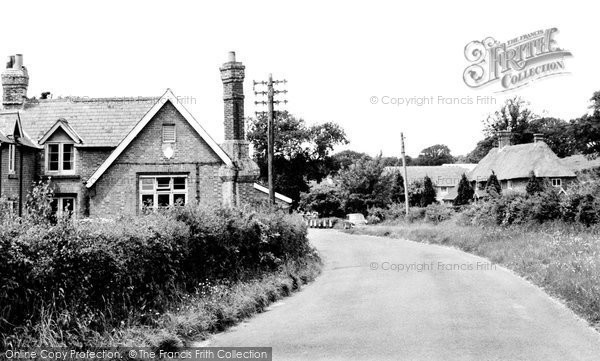
His country home was at Catsfield, one of the many properties belonging to the vast Crowhurst Estate.

He then was offered command of a brand new battalion, one of Kitchener's 'New Army'. He was 51 years old. I cannot conceive of a 'posher' more straight-back 'Toff' put in charge of what must have been the most 'cockney-est' bunch of ill disciplined, rowdy 'football crowd' Cockneys! And I bet he relished it!
I really do think that after the initial 'testing' that he would undoubtedly have been given by the men, that they would come to respect him - for his 'fairness' (as a cricket man); for his combat experience in South Africa; for his impeccable qualifications as a man of Justice (he was an Appeals Magistrate), and of his respect for the traditions of the Past and of the value of recording data for the Future - he compiled a 'stock take' of all the interesting old documents hidden away in the stately homes of England on behalf of the Government before WW1. It began with his own collection of family letters, eventually becoming the Royal Commission on Historical Manuscripts in 1904.
The Volunteers would have got to know Papillon, from that first parade at St Luke's Church, West Ham on February 7th 1915, or over on Wanstead Flats for the initial training sessions - where I imagine he probably showed great 'public school' & Army enthusiasm, gave encouraging speeches and did equally as much hard graft as he expected others to : in other words he 'mucked in'.
The response was enormous: word went around and the West Ham Battalion were overwhelmed with fresh volunteers - so many, in fact, they even considered raising a second "Hammers" Battalion.
The Thames Ironworks Band played the music at the drumhead at Wanstead on May 16th, and by May 19th 1915, 1,300 smartly turned out soldiers, including my GtGrandfather, marched from Stratford to Brentwood and began their journey to France & Flanders.
I expect he was very anxious after seeing the HS Anglia blow up in Folkestone Harbour, as two of his sisters, Kate and Cicely, were serving as nurses with the French Red Cross.
On the European battlefield, the combat action slowly built from relatively calm Trench training area's through to the full horrors of WW1 Warfare, the death count kept building, finally culminating in a crescendo when he was severely wounded by artillery 'crumping' his HQ Command Post while at Delville Wood.

On the 28th August, he 'proceeded to England on special leave' back to his pregnant wife. It's likely that the War was carving a very deep wound inside Pelham.
Immediately after the Great War, he did two things. He reformed Crowhurst Cricket Club in 1919. And, as he was most definately made an Honourary Hammer by the 'Originals' of the West Ham Battalion, he renamed one of the properties on his Crowhurst estate Green Street Farm.
Not bad for a man with Colchester streets named for his family - Papillon Road intersects Rawstorn Road and Crowhurst Road in Colchester, Essex. Close by, at Lexden Church, you'll find plenty of stained glass memorial windows to the Papillon family, images of which were kindly sent me by the Church Warden Vivien Mendham.
He was visited at home by Queen Mary in 1935. He was the British Legion Crowhurst Branch President and Battle Branch vice President. At his funeral on March 19th (he died the day before) 1940 at Crowhurst Parish Church, Pelham was carried on a farm waggon with workers from the estate dressed in old Sussex smocks acting as bearers.
Pelham Rawstorn Papillon, DSO, JP, ensured that the name of pretty much every wounded and killed man of the West Ham Battalion was recorded in the War Diary, during his Command. It's only because of him that I know the circumstances of my GtGrandfather's death and am able to assist others to discover about their ancestors part in The Great War.
He shook the hand of every soldier he sent 'Over the Top'.
A very honourable man.


Two years later, on Mar 5th 1942, Crowhurst Park was sold - furniture, paintings and library collection, everything put up for auction by his son John and soon scattered to the four corners.
The beautiful stone mansion, a park of 240 acres plus 4 farms, in total 930 acres, the whole lot.
Sometimes, pieces from that old sale still come up.
The land, house and contents were finally sold under the hammer during December 1944, and his son moved to the Cotswolds.
Crowhurst is now a posh caravan site.
The Papillon family line passed to Pelham's nephew, David, of Lexden. He served in North Africa during WW2 and it was there he was awarded the MBE.
Pelham's son-in-law, lies buried almost alongside him, as if keeping sentry on a treasure.
Flight Lieutenant Hankey was killed while transporting secret agents in France by Lysander aircraft and was the son of Pelham's great friend Alers Hankey. They had served very closely alongside each other in 3rd Sussex during the Boer War.


1 comment:
Great reead thank you
Post a Comment